MAGA Makes Sense
Normal cognition, a controlled information supply, and the deception business that American law declines to treat as fraud.

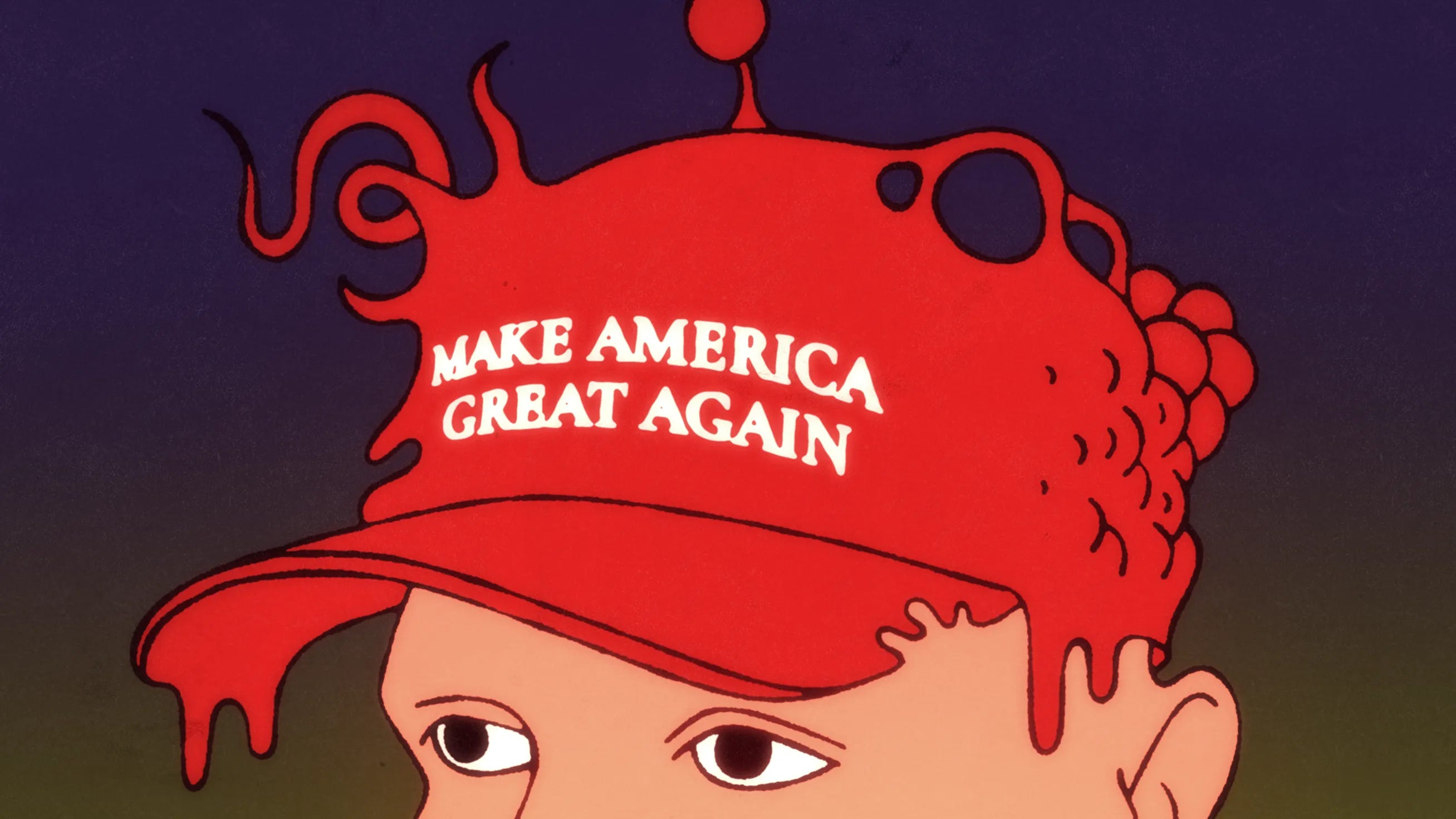
The beliefs make sense. More Republicans named Donald Trump the greatest American of the past 250 years than named Abraham Lincoln or George Washington, in YouGov polling conducted last month for the country’s 250th anniversary; 24 percent chose Trump. A majority of Trump voters, 52 percent, said it was definitely or probably true that Haitian immigrants were abducting and eating pets in Springfield, Ohio, in YouGov polling taken days after the 2024 presidential debate. The city’s officials and the state’s Republican governor had already said no such thing was happening. And after the president called the Epstein files a Democratic hoax, the share of Republicans dissatisfied with what the government had released decreased from 40 percent to 21 percent in six months, in CNN’s polling, while roughly 60 percent of Republicans continued telling Reuters/Ipsos that the government was hiding information about Epstein’s clients. The same people believe evidence is being concealed and have stopped objecting. Each of those numbers describes normal human minds applying normal human cognition to a controlled information supply. The conclusions follow from the information available. Change the information and the conclusions change, and the research demonstrating that is some of the most rigorous in political science.
Humans treat agreement among trusted people as evidence, because for most of human history it was. People will give answers they can see are wrong in order to agree with a unanimous group, Solomon Asch demonstrated in the 1950s. Reasoning itself evolved for the social purpose of justifying our beliefs to others, Mercier and Sperber argue, which means that believing what everyone around you believes is what a normally functioning mind does. Better math skills made partisans less accurate at interpreting data that contradicted their party’s position, in Dan Kahan’s motivated numeracy experiments. In practice, reasoning justifies the group’s beliefs. In an environment where every trusted source, every neighbor, and every algorithmically sorted feed agrees, the MAGA worldview is the rational conclusion.
The clearest single demonstration took place during the 2020 campaign. Broockman and Kalla recruited committed Republicans who were heavy Fox News viewers and paid them $15 an hour to watch CNN instead, averaging almost six hours a week from August 31 through September 25, 2020. The design replaced one news source with another rather than removing news from participants’ routines. Afterward, they were 5 points more likely to acknowledge long COVID, 6 points more likely to say other countries handled the pandemic better, and 7 points more supportive of voting by mail. Two months later, the participants had reverted. The reversion matters more than the initial result, because it demonstrates the dependence twice: once when the source changed, and again when the participants resumed watching Fox. Same mind, different information, different conclusions. The study was published in the Journal of Politics as “Consuming Cross-Cutting Media Causes Learning and Moderates Attitudes.”
Many other studies produced consistent results.
Paying people to deactivate Facebook for the four weeks before the 2018 midterms measurably reduced polarization on policy issues, Allcott, Braghieri, Eichmeyer, and Gentzkow found.
Fox News persuasion increased the Republican share of the presidential vote by about half a percentage point in 2000 and by roughly six percentage points in 2008, Martin and Yurukoglu estimated, using cable channel position as a natural experiment.
Nonjudgmental one-on-one conversation produced attitude change that was still measurable months later, in Kalla and Broockman’s deep canvassing experiments.
Republicans paid to follow a liberal Twitter bot became more conservative, in Bail and colleagues’ 2018 experiment. New information sources and sustained personal contact change beliefs. Confrontation makes existing beliefs more extreme.
Vaccine beliefs display the pattern with unusual clarity, and describing the pattern requires no position on any vaccine. Republicans report confidence in the safety of the flu vaccine at 64 percent and confidence in the safety of the COVID vaccine at 36 percent, in the Kaiser Family Foundation’s surveys. The same people trust one vaccine and distrust the other, and the two vaccines received different coverage. By October 2021, partisanship predicted COVID vaccination status more accurately than age, race, education, or insurance coverage. Within the Republican party, identification with the MAGA movement strongly predicts refusal of the updated COVID vaccine while predicting nothing about annual flu shots. And the channel position method described above has a vaccine counterpart: researchers found that greater Fox News viewership caused measurably lower COVID vaccine uptake, that CNN and MSNBC viewership had no effect on uptake, and that partisanship did not explain the result. A cable lineup number can change a medical decision only when the decision came from the coverage, because independent evaluation of evidence contains no variable for channel position. Party, movement identity, and channel assignment predict the belief, and a belief that those three things predict was produced by community and coverage. That description applies to every reader of every party.
The distinction in Bail’s result matters for anyone with a MAGA relative. Arguing fails. Correcting individual false claims fails. Replacing the information environment succeeds, slowly, through sustained personal contact and different information sources. The person can change. The environment is the variable.
Considered as a commercial operation, the same environment meets every ordinary definition of fraud: knowingly false statements, produced for profit, with the intent that the audience believe them. In any other market, this would be prosecuted: securities deception under Rule 10b-5, deceptive advertising under Section 5 of the FTC Act, and lies that obtain money under the wire fraud statute. In politics it is protected, and the reasons are worth understanding precisely, because they identify what would have to change.
The explanation begins with how the law defines fraud. Fraud has never been protected speech, but the legal category is narrow: a knowingly false statement of fact, made with intent to deceive, that a specific victim relied on, causing a measurable loss of money or property. A lie about company earnings satisfies every element. The buyer relied, paid dollars, and can prove the amount lost. A lie about an election fails the harm element. A vote is not money or property under the law, the injury is distributed across millions of people, and no single voter can prove a quantifiable loss. Courts protect political lies in the first instance because no legal category exists for the harm they cause.
The subject matter then adds a second, independent protection. First Amendment doctrine assigns speech to tiers. Political speech receives the highest level of protection, and any law restricting it based on content must satisfy strict scrutiny, a standard almost no statute meets. Commercial speech receives intermediate scrutiny under Central Hudson (1980). Securities speech receives less protection still, because a company selling stock to the public voluntarily subjects itself to a mandatory disclosure system in which the government can both compel statements and punish false ones. Courts offer a practical justification for the difference: a company can verify its own revenue before speaking, many political claims cannot be verified at all, and speakers who risk liability for contested statements will stop making true claims along with false ones.
Courts give three named reasons for giving political speech the highest protection. First, the sedition problem. Any statute punishing political lies will be enforced by incumbents against challengers. New York Times v. Sullivan (1964) cited the Sedition Act of 1798, which Federalist prosecutors used to jail opposition editors, as the controlling historical lesson. When the Eighth Circuit invalidated Minnesota’s false-campaign-statement law in 281 Care Committee v. Arneson, and the Sixth Circuit affirmed the ruling that Ohio’s law was unconstitutional in Susan B. Anthony List v. Driehaus, both courts noted that complaints under those laws were filed as a campaign tactic in the final weeks before elections. Second, the truth-arbiter problem. United States v. Alvarez (2012) invalidated the Stolen Valor Act, a federal law that criminalized lying about military medals, with the plurality writing that “Our constitutional tradition stands against the idea that we need Oceania’s Ministry of Truth.” Third, the counter-speech theory. The remedy for false speech is true speech, the Court has repeated since Holmes proposed in 1919 that ideas should be tested by whether audiences accept them in open competition.
The third rationale is the one the research above already tested. The counter-speech theory is an empirical prediction: an audience that receives both true and false statements will eventually believe the true ones. Broockman and Kalla performed that exact test. An audience of Fox viewers received a month of different reporting, their beliefs changed, and their beliefs reverted once the alternative source was removed. Securities law exists because Congress concluded in 1933 and 1934 that markets fail without enforced truth. First Amendment doctrine assumes the opposite about political information. The evidence is consistent with the securities laws and inconsistent with the doctrine. That result has a precise meaning. The sedition problem and the truth-arbiter problem remain unsolved, and no experiment identifies a censor that incumbents could not abuse. The result demonstrates one thing: the doctrine depends on a factual claim, and the factual claim is false.
The statutes then make the exemption explicit. The Federal Election Campaign Act contains no truthfulness requirement of any kind; the FEC regulates money and disclosure and has no jurisdiction over the accuracy of an ad. The FTC Act and the Lanham Act apply only to commercial advertising. Section 315(a) of the Communications Act is more explicit still: broadcasters are legally forbidden from editing or rejecting a candidate’s own ad based on its content, and receive immunity from defamation liability for those ads in exchange. Stations may reject ads from PACs and outside groups. For the candidate’s own speech, federal law requires stations to air the lie unedited. Congress wrote every one of those statutes, and members of Congress are the primary buyers of political advertising.
Liability exists in exactly two situations. Lies about the mechanics of voting, such as false polling hours or false eligibility rules, receive less protection in most courts, because they obstruct the act of voting rather than persuade the voter. And lies that injure an identifiable victim in a legally recognized way produce judgments. Dominion collected $787.5 million because Fox defamed a corporation. Sandy Hook families won verdicts totaling nearly $1.5 billion because Alex Jones defamed specific people. Steve Bannon pleaded guilty because We Build the Wall took donors’ money under false pretenses. The deceived viewer, the intended victim of the entire operation, has no cause of action anywhere in American law. The absence of any remedy for the deceived audience is the fact that makes the business model legal.
MAGA makes sense. Beliefs produced by an information environment change when the environment changes, and the research demonstrates that the audience can change. The environment itself does not change, because the people who produce it profit from the deception and owe nothing to the deceived. The law creates that arrangement and maintains it. Deceiving millions of voters remains the only fraud in American life that produces this much revenue and this little liability.
I am one of the newer writers at The Existentialist Republic. If this article was useful to you, I hope you will consider subscribing so I can keep delivering more of this work
My father was a big Fox viewer which made him MAGA-ish through his later years but in his last year he could not control his channel choices and I told the home health aides to never show him Fox or the like and stick to sports. He was then always in a better mood and died happier.
Basheer connected the experiment to the case law faster than any scholar I have read. The Brockman and Kalla data disproves the factual claim beneath the counter-speech doctrine. This reversion finding shifted my view. The viewers moderated and then reverted, which means the belief requires daily reinforcement. People who argue with a MAGA relative address the wrong variable.